A boy’s story reaches London
Edmund Robinson hadn’t done his chores. The excuse he made up was that he had seen witches gathering in Pendle Forest. By the time the boy admitted in London that the story was false, dozens of people in Lancashire had faced accusations. Four women had been taken hundreds of miles from home: Jennet Hargreaves, Frances Dicconson, Mary Spencer and Margaret Johnson.
The judge at the Lancashire trial had been uneasy enough to refer the matter to the Privy Council, the king’s advisers. Officials heard from the women. In the Bishop of Chester’s account of his interviews, Mary and Frances deny the charges. Margaret confesses; the bishop himself doubts her reliability. It’s worth keeping those answers separate. They were four people, not four copies of the same witness.
What counted as evidence
On 2 July 1634 a group of surgeons and midwives met at Surgeons’ Hall in London. Under orders from the council, they examined the women’s bodies. The belief they were investigating was that a spirit or animal familiar might leave a mark where it had fed. Their signed report survives. It says they found “nothing unnatural” on Jennet, Frances or Mary. It describes two marks on Margaret’s body, down to their colour and position, without finding evidence that anything had fed there.
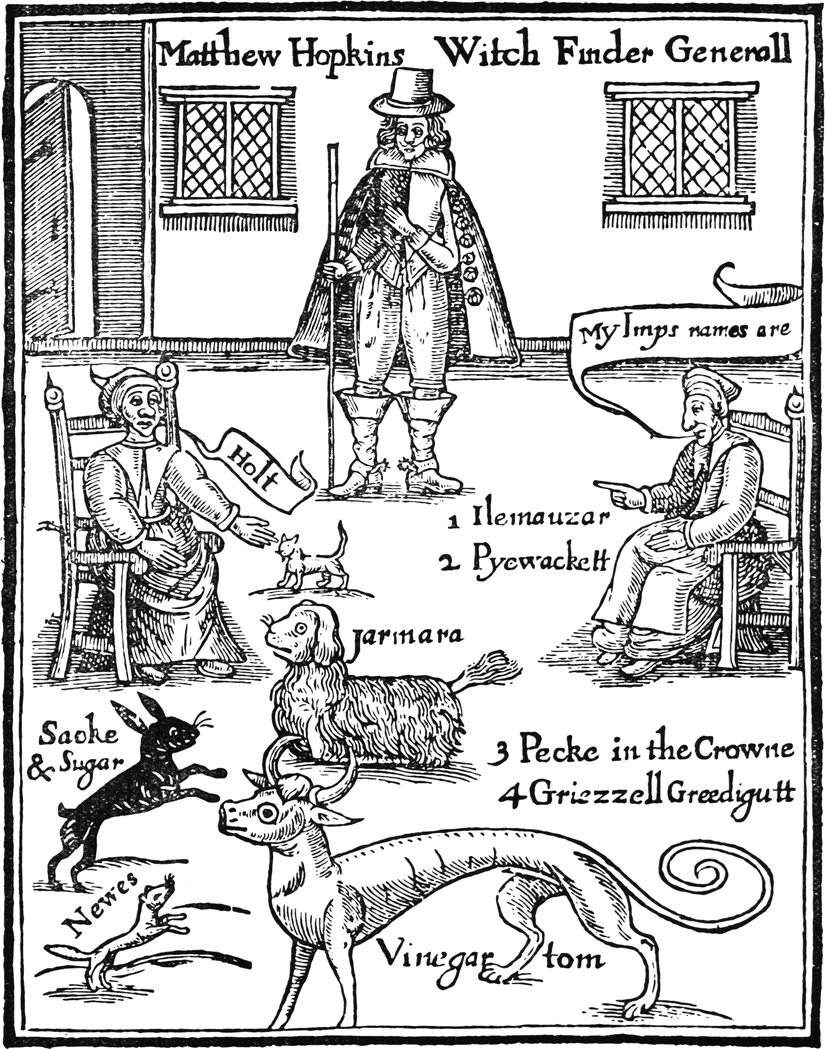

There is no wand in the report. There are names and signatures for the people who did the examining. There is an entry in a later prison record that matters more than any drawing of a witch: in July 1636, two years after Edmund took back his story, Jennet, Frances and Mary were still imprisoned in Lancaster. Margaret is absent from that list. The record does not say what happened to her.
When the prisoners get to speak
Across the Scottish border, the Survey of Scottish Witchcraft records the names of 3,212 people accused between 1563 and 1736. The researchers could identify a trial sentence for just 305 of those named. A quarrel might be remembered after someone fell ill and retold as evidence of a curse. In neighbours’ testimony, a reputation of that kind can follow someone for twenty or even forty years.
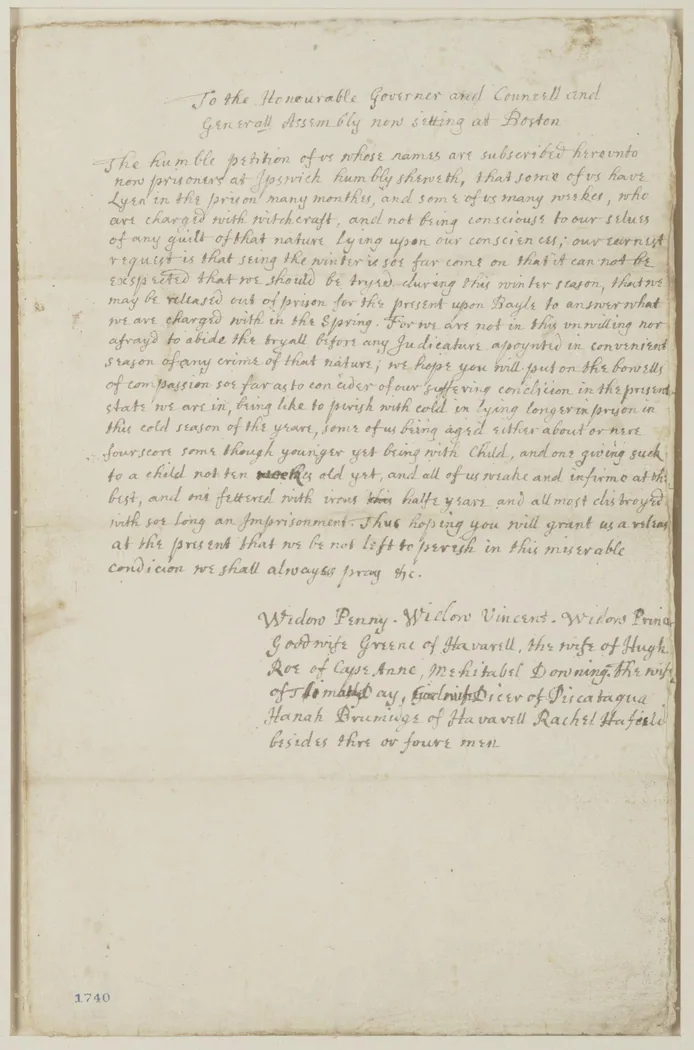
Nearly sixty years after the Lancashire case, prisoners in Ipswich, Massachusetts, petitioned for bail. Winter was approaching. Some were pregnant and some were in irons. The petition asks for release until trial so they would not “perish with cold.” This is one of the rare places where the practical question for the accused is still audible: how were they to survive until spring?