The inscription on the back
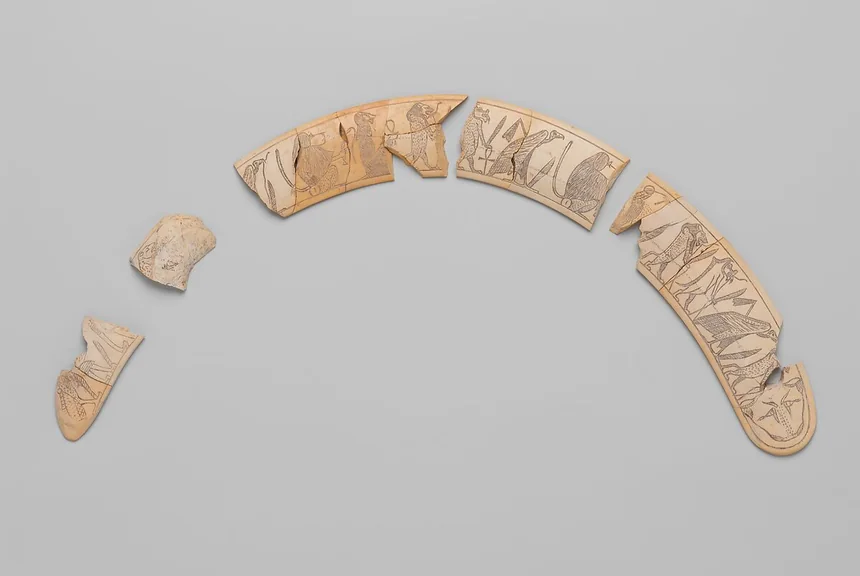
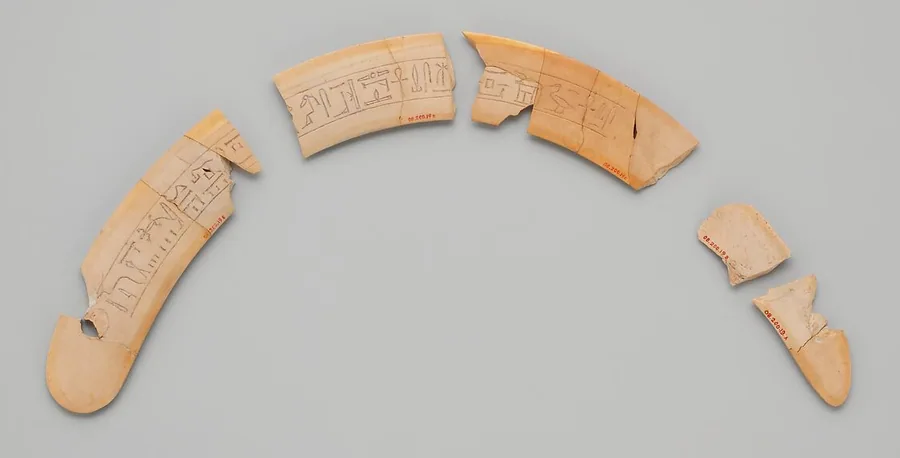
Most of the gods on Minhotep’s wand carry knives. The ivory is scarcely longer than a school ruler, but the carver found room for a procession on one side and a speech on the other. It is the gods who speak. They have come to protect Minhotep, the child of a noblewoman called Sitsobek. After the child’s name come three wishes: “alive, sound, and healthy.” The carver repeats them after the mother’s name, too.
There’s wear on one tip. Someone had been using the wand before it went into a tomb. At Lisht, excavators found a second protective wand with a shorter inscription about protection by day and by night. Its tip is worn, too. One proposed use is that a caregiver traced a circle on the ground around the place where a baby slept. The ivory preserves the wear rather better than it preserves the gesture.
Protection in the birth room
A find at Abydos helps put those wands back in a room with a family. In 2002, archaeologists excavating a Middle Kingdom official’s residence found a painted mud brick used in childbirth. One face shows a seated mother holding her newborn, with women attending her. The sides carry guardians associated with the sun god. The mother, like the sun at dawn, had brought a new life into the world; both needed defending.
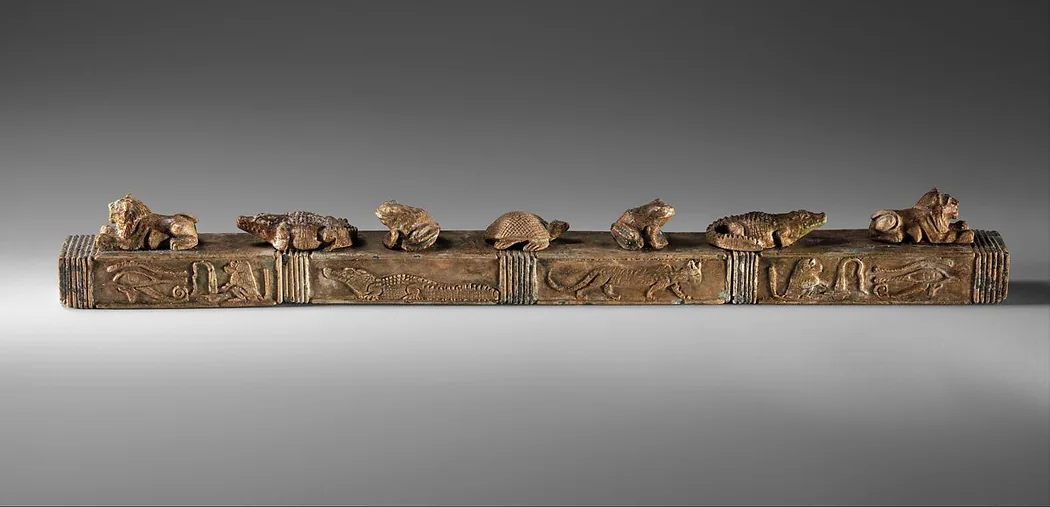
For a different way to assemble such a guard, look at the straight rod of glazed stone below. It comes apart into four pieces. Lions occupy the ends, with crocodiles, frogs and a turtle along the top; baboons with lamps appear on the sides. The animals sit in three dimensions where an ivory carver would have had only a shallow cut to describe them.
Wands made to guard people in life were placed with them in death. That is how a tool of ordinary parental concern could survive in a burial for thousands of years. What makes this particular one so affecting is that the family did not remain anonymous.